“Just because you don’t know anybody from the right-hand side of the bell curve doesn’t mean they’re not there”
navigating the second Gilded Age through humor, invective and insight
“Just because you don’t know anybody from the right-hand side of the bell curve doesn’t mean they’re not there”
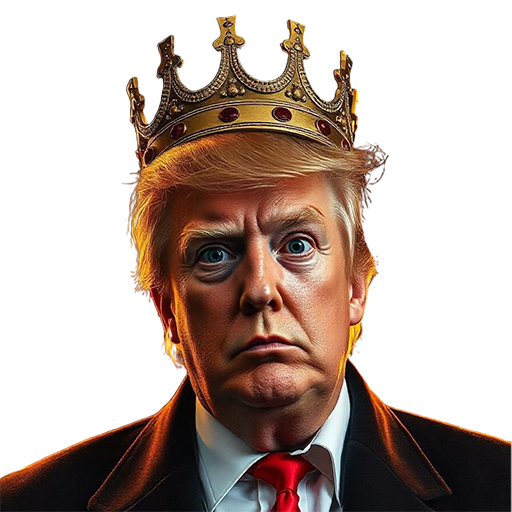
A cardinal belief in Trumpworld is that DEI is immoral, evil and against the principles on which America was founded. His Imperial Majesty, Trump the First, has emphasized this by terminating every aspect of DEI he can get his hands on.
But he himself demonstrates, powerfully, just how stupid opposition to DEI is, and why banning it inevitably harms the community.
Remember all those voters during the election last year who said they didn’t like any of the candidates? And the ones who voted for Trump but wished they could’ve voted for someone else?

They were denied that choice because the candidate pool was constrained. Sure, there were some competitors early on. But the one with the best chance — Nicky Haley — suffered, no doubt, from the poor choice she made to be born a woman1.
Limiting diversity is not a plus. Who would want less, rather than more, choice?2 Talent and skill can appear anywhere, in any form, making arbitrary limits on what you’ll consider silly. It’s yet another example of the danger of not realizing you’ve put your thinking in a box.
From the polling I’ve read, I’m confident the same thing happened to Kamala Harris. Heavens, someone with a vagina in charge of the country! That can’t be good, because it’s never been done before!
Which also highlights a fundamental flaw of conservatism: it seeks to maintain a status quo ante in the face of a constantly changing world. But that’s a separate topic.
I guess she could’ve tried to go trans. But that probably would’ve turned off even more Republicans than her being a woman 🙂 ↩
Actually, some of us don’t like being overwhelmed by choice. My wife and I experienced that when we had to pick out light and plumbing fixtures for our new home. Do you have any idea how many choices there are of those things?!? I certainly didn’t. But that was a problem of too many choices, not a problem of not having enough. ↩
mostly incoherently, but still…
For many reasons, I will never forget Mr. Muchio, who taught me algebra in the 7th grade.
One of the biggest challenges in learning algebra isn’t the math itself. It’s learning how to parse descriptions into mathematical equations you can then use the rules of algebra to solve. It’s a process of abstraction, figuring out what are the essential details and what is “merely” descriptive and/or reflective of a particular situation. This is commonly known as learning to solve word problems.
We quickly became masters of this…or thought we had.
As Mr. Muchio pointedly kept reminding us, what we were actually doing was leaving stuff out to overly simplify the problem. I still remember his admonition, decades later: “You’re using a silly rule: ‘when in doubt, leave it out’. But it means the problem you solve isn’t the one you were supposed to solve. Be careful about what you leave out!”
Once upon a time I was chief financial officer of a startup biotech company. One day my boss, the CEO, and I were traveling back to meet with investors to pitch them on why they really wanted to keep buying our stock.
During the flight I reviewed the financial models and presentation I’d spent days creating. Somewhere over the Midwest I suddenly realized several of the key summary values, which were central to my analysis, had gotten hard-coded. They didn’t reflect the revised assumptions I’d made.
This meant my beautiful and compelling pitch was completely wrong. In fact, we didn’t look like such a good investment after all.
Needless to say, I didn’t get much sleep that night. I had to revise everything.
Ever since, my Excel models are littered with “check figure” lines, that confirm totals are, in fact, reflective of the data they claim to summarize.
One of my earliest political memories was of Joe Namath, a very talented and famous quarterback in 1968, being asked who he thought should be our next President. I was 13 at the time.
I remember thinking “He’s a phenomenal quarterback. But why in the world would anyone think that’d make him an expert on national politics and the Presidential candidates?”
It takes a lot of time and effort — and focus — to become an expert in anything. Very few of us have the resources to do that in many different fields.
This spillover expertise effect really comes into play, at least in the United States, with business titans and governing.
Just because someone is successful in business, they don’t necessarily have a clue as to how to successfully lead a community in its pursuit of happiness and the greater good. Business, for all its challenges, is a much, much simpler environment to operate in than government. I know this from personal experience because I worked in each for 20 years, as a financial executive and as a local elected official.
In business, you succeed by focusing on making money while not breaking the rules. Or at least not breaking them too much.
In government, at least in a representative constitutional democracy, there is no single goal, and no marketplace in which to value tradeoffs from moment to moment. In fact, there’s often no market at all.
The Michelson–Morley experiment, which produced the data that overthrew Newtonian physics, was performed in 1887.
But it went unexplained until 1905, when Albert Einstein published the special theory of relativity.
What were the world’s physicists doing during those 18 years? Ignoring the data and hoping it would go away? Playing pinochle?
No, they were trying to jam the empirical data into Newtonian physics. Because that just had to be true! It’d successfully explained everything (well, almost everything) for centuries!
Once you accept the box you’re in, it’s damn hard to break out of it. Or even realize you’re in a box.

Ever wonder why research reports in Science, Nature, or any other scientific journal are terribly boring and hard to read?
It’s because the authors are required to disclose, fully, materials and methods, how they did their analysis, etc. They have to establish provenance, and reproducibility…both of which are key to critical thinking.
They only get to discuss what their results (might) mean in the last few bits.