“Just because you don’t know anybody from the right-hand side of the bell curve doesn’t mean they’re not there”

It’s been a l-o-n-g time since I posted anything here. The reasons for that are various…but since Jon Mays, the San Mateo Daily Journal editor said this is where I’m spending most of my time, I figure it’s time for the drought to end :). And what better way to do that than with an upbeat posting! This is an op ed I wrote which Jon published today. You may need a subscription to read it there.
I’m often in a minority among progressives because I am a staunch patriot. Granted, an objective reading of American history reveals many sad political choices, some of which were undeniably evil. But it also surfaces instances of noble decisions and sacrifices which made the world a better place.
This dichotomy between what we sometimes are and what we aspire to be has been with us since our founding. It’s clear many if not most of those who signed the Declaration of Independence were not interested in granting a seat at the table to anyone other than privileged white males. John Adams was astounded to learn the State of Pennsylvania was going to enfranchise some working men. He and the rest of the Continental Congress – which was exclusively male – also rejected the idea of including women. And preserving unity required staying silent on slavery, which at least some knew was evil.
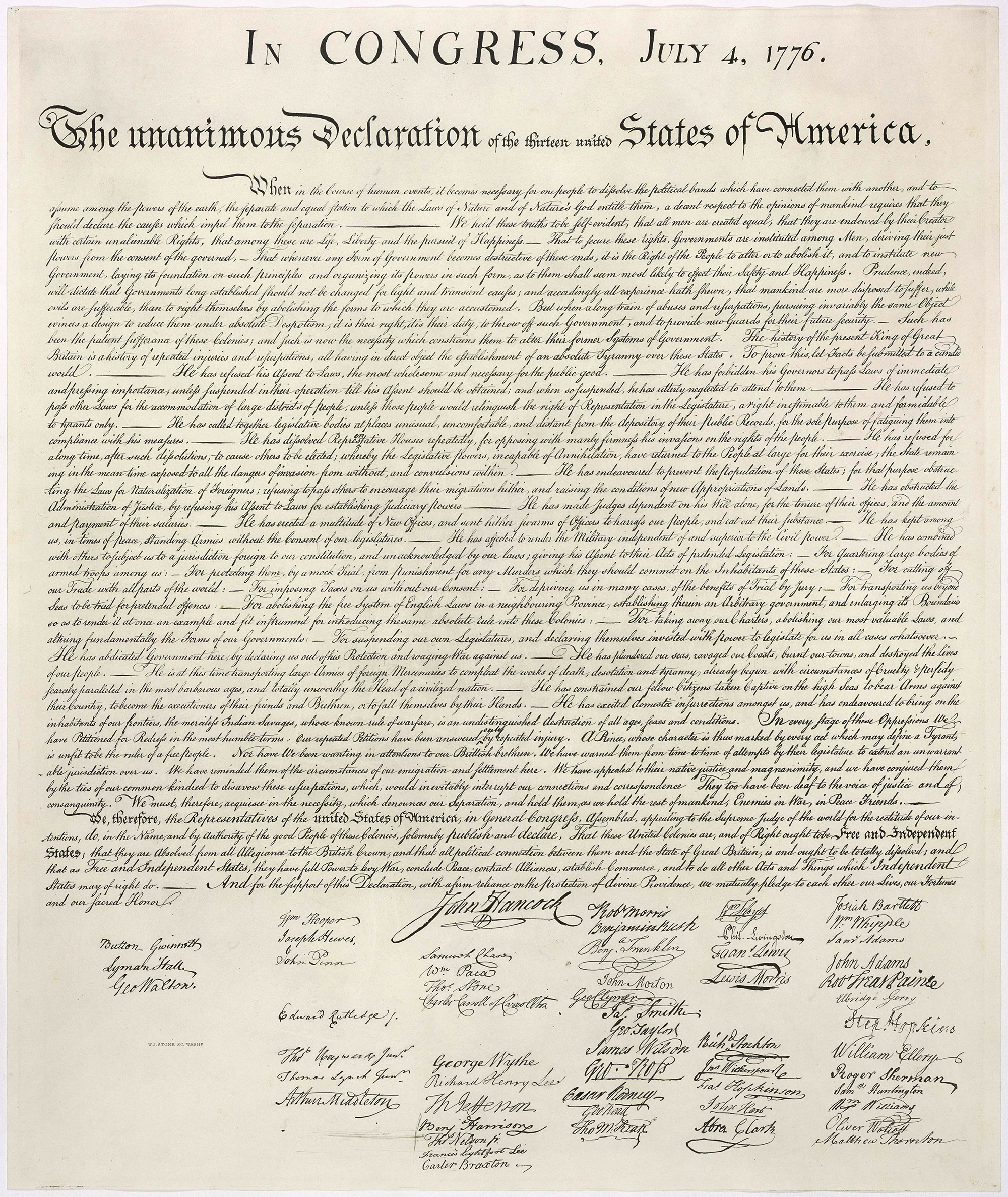
But in their need to justify their rebellion — to potential allies leery of joining a British civil war, to the world at large, and to themselves – they stumbled upon a profound truth: that governments exist solely and only to serve the people who bring them into being, so as to assist the people in their pursuit of happiness.
This insight was, and remains, shockingly revolutionary. Even modern Americans often find the Declaration, stripped of its famous opening stanza, a disturbing challenge to the status quo.
And they are right to see it that way. Because the status quo generally favors the successful. That’s not automatically bad. But it can, all too often, lead to corruption and the curtailment of liberty.
That the founders may not have been as noble as many would like to see them doesn’t matter. Because they wrought better than they knew…while starting a fight that continues to this day. You can explain much of our often-bloody history as the struggle between what they wrote and the desire of those currently in power to retain their privileges and further their own interests. The revolution announced by the Declaration has never really ended…and, given human nature, it probably never can.
Whether it was Southern slavers asserting they could not be truly free unless they were free to own other human beings, or Gilded Age barons and later monopolists profiting from wage slaves, or those who made Blacks second-class citizens through Jim Crow laws, history shows we will never lack for people whose urge to dominate others to serve themselves knows no bounds. Which is why time and again Americans have had to fight, and will have to continue to fight, to preserve the promise at the heart of the Declaration. It’s the ultimate American cause…and it defines what it means to be an American.
Today the challenge is upon us once again, with an elected wannabe despot and his enablers doing things most Americans oppose, all in the name of protecting and preserving the nation. But more and more people are seeing through the subterfuge and are realizing the real goal is to create a system where freedom and happiness are only for those who toe a line set by their self-appointed betters. Who will also ensure the interests of those who helped put them in power are protected and enhanced, regardless of what that will mean for the rest of us.
Fortunately, a growing number of people remember those simple, self-evident truths, and are standing up to defend the real promise of America. It takes a lot to convince ordinary people to sacrifice their time – not to mention, sadly, their lives – to fight against injustice. The fact that so many are doing just that should give us all hope, and encourage those of us on the sidelines to join in. These brave souls reject jingoistic patriotism, in favor of the revolutionary vision that burst onto the world stage when the Declaration was published.
Those who would destroy America’s promise have been defeated before, more than once. And while their defeat too often involves bloodshed, it doesn’t require armed revolt. Everything that needs to be done can be done through the ballot box…provided we prevent those in power from destroying that ultimate guardrail.
We need to reject the false leaders currently in power and replace them with ones who understand true American leaders work for all the people, not just themselves and the few. If we do that, we can get the new birth of freedom so many crave…and ensure that government of the people, by the people, for the people, shall not perish from the earth.